Infrared vs. Traditional Sauna: The Case for Infrared
Walk into our showroom and you’ll see two kinds of sauna: a classic Finnish-style cabin with a heater and rocks, and a sleek infrared model with glowing panels. Both make you sweat. Both feel incredible. But when you look past the romance and ask which one actually fits your life, infrared wins for most people — and it’s not close. Here’s why.
It plugs into the wall. That’s the whole installation.
This is the single biggest practical difference, and it dwarfs everything else.
An infrared sauna runs on 120 volts — a standard household outlet, the same one your lamp uses. It assembles in an afternoon, often in a spare bedroom, home office, or garage corner. No electrician. No permit. No scheduling a contractor.
A traditional sauna needs a 220V line hardwired by a licensed electrician, usually on its own dedicated circuit. If your panel is full or your wiring is older, that “simple” install can turn into a multi-hundred — sometimes multi-thousand — dollar electrical project before the sauna itself even arrives. Plus ventilation planning, plus the wait.
So before you compare heat or health claims, compare this: one sauna is a weekend project, the other is a construction project. For most buyers, the decision is half made right there.
The heat goes deeper, not hotter
A traditional sauna heats the air to 150–195°F and that hot air heats you. It’s intense — and for some people, hard to breathe in.
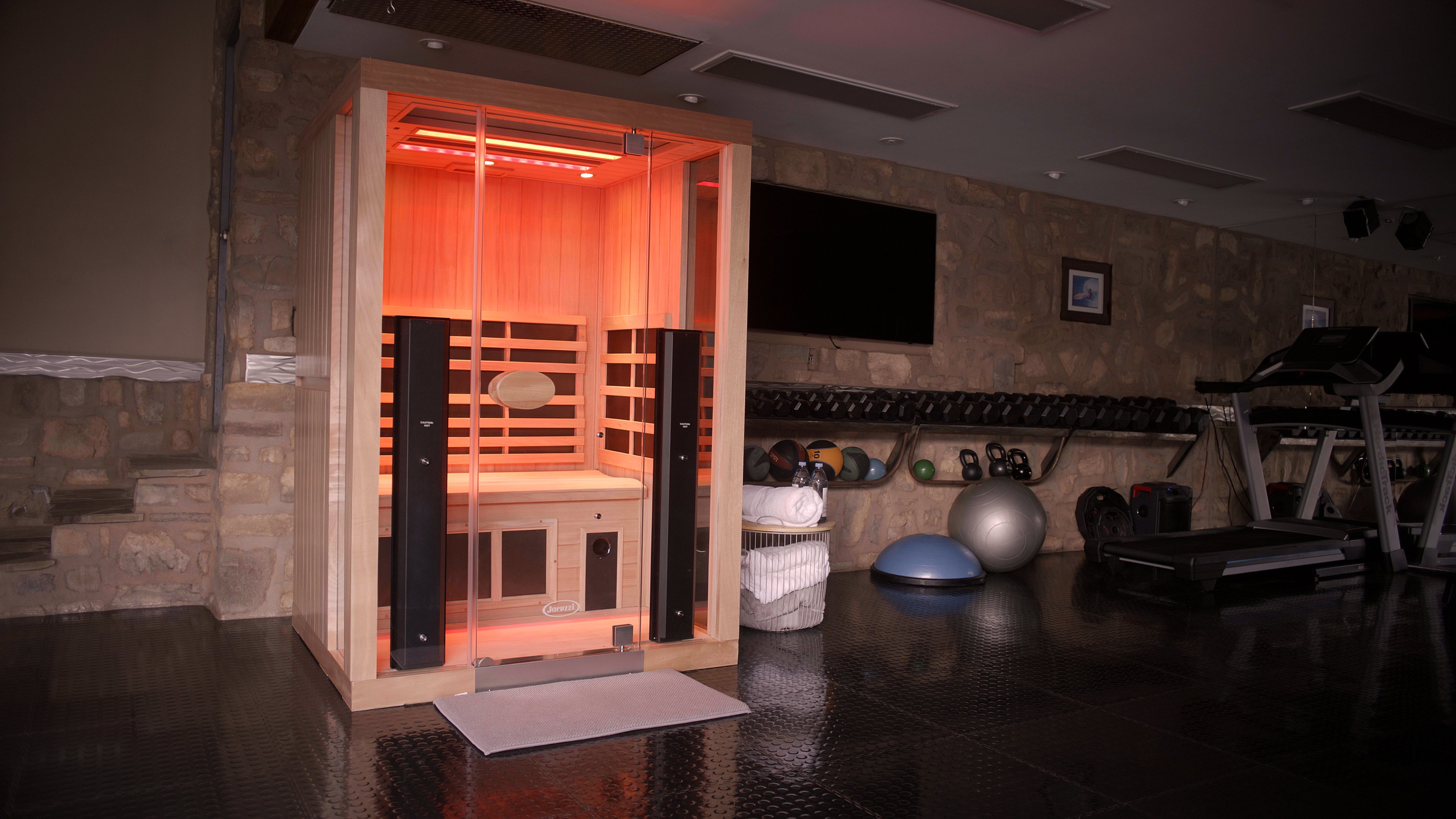
Infrared works the opposite way. The panels emit radiant heat that penetrates inches into your body, warming you from the inside out while the cabin air stays a comfortable 120–140°F. You get a deep, drenching sweat without the 190-degree blast and without the air scorching your lungs.
This isn’t a gimmick of one brand. Both our Jacuzzi infrared models and our Health Mate infrared line work on the same principle: direct radiant heat, deep penetration, lower air temperature. People who found traditional saunas unbearable routinely become daily infrared users — because the heat goes into the muscles and joints instead of just hammering the skin.
That deeper heat is also why infrared users rave about recovery: looser muscles after workouts, easier joints in the morning, and that wrung-out-in-a-good-way feeling after a 30–45 minute session. You ease into it the way you’d ease into warm sunlight, then sweat like you mean it.
The honest nod to traditional
We’ll say it straight: if you dream of a backyard wood-fired cabin, the steam ritual, ladling water on hot rocks for that burst of löyly — a traditional sauna is a lifestyle, and infrared won’t scratch that itch. For purists, there’s no substitute.

But that’s a lifestyle purchase, not a wellness routine. And most people don’t buy a sauna for ritual — they buy it to feel better every day.
What about health benefits?
You’ll see big claims online — detox, weight loss, heart health. Here’s our honest position: people consistently report better sleep, looser muscles, faster workout recovery, and lower stress from regular sauna use, and there’s real research behind heat exposure and cardiovascular health. But a sauna is wellness, not medicine. If you have a heart condition, are pregnant, or take medications affected by heat, talk to your doctor first. We sell relaxation and recovery, not cures.
The practical scorecard
- Installation: Infrared plugs into a standard 120V outlet and assembles in an afternoon. Traditional needs a 220V hardwired line, an electrician, and usually a permit.
- Heat-up time: Infrared is ready in 10–15 minutes. Traditional takes 30–45 minutes.
- Comfort: Infrared heats your body directly at milder air temps — easier breathing, longer sessions. Traditional is intense, enveloping heat.
- Space: Both come in 1- to 2-person sizes up to family cabins. Infrared cabinets tend to be more compact for the same capacity.
- Outdoor use: Traditional owns the backyard cabin. Infrared is primarily an indoor product.
The bottom line
For most people, most homes, most routines: infrared. No electrician, no permit, no waiting — just deeper heat, easier breathing, and a sauna you’ll actually use every day.
We stock Jacuzzi and Health Mate infrared models on our Melbourne showroom floor, alongside traditional cabins if you want to compare. Sit in both and feel the difference — then ask yourself which one you’d still be excited to install. Mr. Fireplace Patio & Spa — Florida’s largest Jacuzzi dealer — nearly 50 years of experience and factory-direct pricing on every project. Call (321) 727-7565.